
Purchase Price Variance (PPV): Why Your Procurement Team Should Track It Relentlessly
$49.95
Purchase Price Variance (PPV): Why Your Procurement Team Should Track It Relentlessly
Purchase Price Variance (PPV) is one of the most important financial and operational signals inside a disciplined procurement organization. At its core, PPV measures the difference between what a company expected to pay for a material or service and what it actually paid. That delta—positive or negative—reveals how well procurement is controlling cost, executing sourcing strategies, and enforcing purchasing discipline.
In mature organizations, PPV is not treated as a theoretical accounting metric. It is a practical control mechanism used daily to expose pricing drift, supplier behavior, internal compliance gaps, and forecast errors that quietly erode margin.
Purchase Price Variance (PPV) in Procurement Operations
PPV in procurement exists at the intersection of sourcing, finance, and operations. While finance may report the number, procurement owns the behavior that creates it. Every sourcing decision, contract term, price increase approval, or spot buy feeds directly into procurement purchase price variance results.
A strong procurement purchase price variance process depends on standardized documentation. Approved suppliers, controlled purchase orders, and locked pricing terms ensure that actual costs align with negotiated expectations. When companies bypass these controls – buying outside contract, skipping approvals, or allowing uncontrolled changes – PPV becomes volatile and unpredictable.
Spend discipline is supported by using a complete Purchase Order Form and Approval limits in Purchasing. Below are links to examples of these forms.
https://getyourpurchasingdocuments.com/product/purchase-order-form/
https://getyourpurchasingdocuments.com/product/approval-limits-template/
Purchase Price Variance (PPV) Calculation and Standard Cost vs Actual Cost
At a basic level, PPV calculation compares standard cost vs actual cost. The standard cost is typically derived from contracts, price lists, or standard cost rolls maintained in the ERP. The actual cost is what appears on the supplier invoice and is matched during receiving and invoicing.
When actual prices exceed standard cost, PPV turns unfavorable. When procurement secures pricing below standard, PPV is favorable. While the math is simple, the causes are not.
Common drivers include:
• Supplier price increases not formally approved
• Poor contract enforcement
• Incorrect standard cost maintenance
• Emergency or spot purchases
• Volume fluctuations affecting price tiers
This is where purchase price variance accounting becomes critical. Without accurate master data, PPV tells a distorted story – sometimes blaming procurement for accounting errors or outdated standards.
Other important operational pieces to this plan to reinforce accurate cost capture include the Goods Received Note / Receiving Log process and the Three-Way Match when paying invoices. You can find an example of the Goods Received Note / Receiving Log below.
https://getyourpurchasingdocuments.com/product/goods-received-note/
Purchase Price Variance (PPV) Analysis as a Cost Control Tool
Purchase price variance analysis is where PPV shifts from reporting to action. High-performing procurement teams don’t just report PPV—they dissect it. They segment variance by supplier, commodity, buyer, plant, and ‘time period’ to identify patterns that demand correction.
This analysis often reveals deeper cost variance procurement issues such as:
• Non-compliant buying behavior
• Weak supplier negotiations
• Inconsistent volume commitments
• Poor demand planning
For manufacturers, material price variance frequently dominates PPV results. Even small per-unit deviations on high-volume materials compound into a six- or seven-figure exposure over time.
Internal link prompt: Reference your Supplier Performance Evaluation Scorecard to connect PPV trends with supplier accountability.
Purchase Price Variance (PPV) Reporting and Executive Visibility
Effective PPV reporting is concise, consistent, and tied to accountability. Executives do not want spreadsheets full of unexplained numbers. They want to know why PPV moved, who owns it, and what is being done.
Well-designed PPV reports typically include:
• Monthly and YTD PPV trends
• Breakdown by supplier and category
• Favorable vs unfavorable drivers
• Linkage to sourcing actions
When procurement owns the narrative, PPV becomes a credibility builder rather than a defensive exercise. It demonstrates that procurement is actively managing cost, not passively processing orders.
Internal link prompt: Cross-link to Procure-to-Pay Process documentation on MSCSgrp.com to show where PPV fits operationally.
Why Purchase Price Variance (PPV) Is a Procurement Discipline Indicator
Ultimately, Purchase Price Variance (PPV) is not just a financial metric—it is a reflection of procurement maturity. Organizations with clean PPV data typically have strong purchasing controls, standardized processes, and supplier governance. Organizations with erratic PPV often suffer from uncontrolled buying, weak approvals, and undocumented price changes.
When supported by standardized procurement forms, enforced approval workflows, and disciplined supplier management, PPV becomes a powerful lever for protecting margin and improving forecast accuracy.
Protecting company margins begins with using standardized forms such as a Purchase Requisition Form, Request for Quotation template, and a Purchase Order Form to reinforce systemized control. You can find examples of these forms by following the links below.
https://getyourpurchasingdocuments.com/product/complete-purchase-requisition-form/
https://getyourpurchasingdocuments.com/product/request-for-quotation-rfq/
https://getyourpurchasingdocuments.com/product/purchase-order-form/
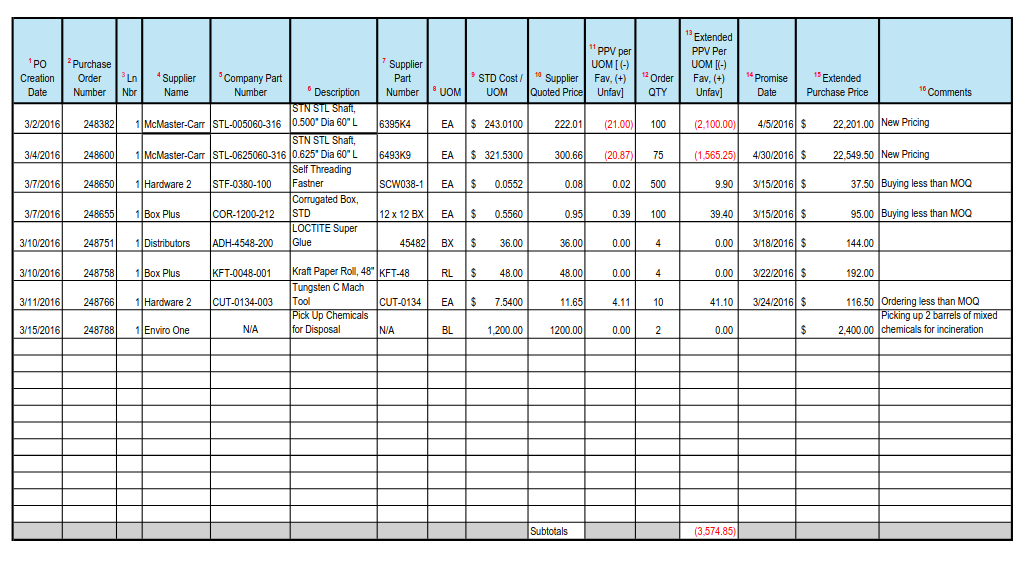
Products Include:
The price includes links to everything you need to use the form(s). The forms, explanation, examples, and the link download(s) are located in your account under Digital Forms.
Purchase Price Variance (PPV): Why Your Procurement Team Should Track It Relentlessly
Purchase now and get immediate access the file
$49.95


