Newsletter
Sign up to stay informed on the latest news and exclusive offers from Get Your Docs.


$49.95
Customers Demand Flexibility in Delivery – Procurement Delivers Using A Purchase Order Change Form
A purchase order change form exists for one simple reason: purchasing never goes exactly as planned. Specifications evolve, quantities shift, delivery dates move, and pricing changes – often after a purchase order has already been issued. When organizations lack a structured way to manage those changes, procurement turns into damage control. Forgotten scope changes, missed approvals, and downstream cost impacts quietly erode margins and create disputes that no one budgeted for.
This is where disciplined documentation separates professional procurement teams from expensive improvisation.
Why A Purchase Order Change Form Can Create Risk Without Control
In the real world, most PO changes start informally. A phone call with a supplier. A “quick email” confirming a revised delivery date. A verbal agreement to add services. These shortcuts feel efficient in the moment, but they create serious exposure across the purchase order lifecycle.
Without Purchase Order Change Control, teams lose visibility into what was approved, when it changed, and who authorized the change. Finance receives invoices that don’t match the original PO. Operations receive partial or incorrect deliveries. Suppliers claim approval that no one can prove or disprove. The result is rework, delays, and uncomfortable conversations during audits.
A standardized change order form in procurement brings those loose ends back under control.
The Role of a Purchase Order Change Form in Procurement
A purchase order change form is the formal mechanism used to document, approve, and communicate any modification to an existing purchase order. This includes price adjustments, quantity changes, scope expansions, delivery updates, or contract alignment issues. In practice, it functions as a procurement change management form that protects all parties involved.
Used correctly, it ensures every Purchase Order modification follows a documented path rather than relying on tribal knowledge or inbox archaeology.
On GetYourPurchasingDocuments.com, this process aligns naturally with other standardized procurement forms such as the Purchase Requisition, Approval Limits, and Purchase Order templates—creating continuity instead of fragmentation.
You can find examples of a Purchase Requisition Form, Approval Limits, and a Purchase Order form using the links below.
https://getyourpurchasingdocuments.com/product/purchase-requisition-form/
https://getyourpurchasingdocuments.com/product/approval-limits-in-purchasing/
https://getyourpurchasingdocuments.com/product/purchase-order-form/
Change Order vs Amendment: Why A Purchase Order Change Form Matters
One common point of confusion is a ‘change order’ vs amendment. While both alter an agreement, a change order typically applies to operational or commercial adjustments tied to an active PO, while amendments often relate to broader contract terms. A Purchase order amendment form may address legal language, whereas a PO change form focuses on execution details that impact cost, delivery, or scope.
Understanding that difference helps teams apply the right document at the right moment—without muddying legal and operational boundaries.
How the Change Order Process Works in Procurement
A disciplined change order process procurement follows a predictable sequence:
First, a PO Change request form is initiated when a change is identified. That request captures what is changing, why it’s necessary, and the financial or operational impact.
Next, the request moves through a defined Change Order approval workflow aligned to approval limits and financial authority. This step eliminates guesswork and prevents unauthorized commitments.
Once approved, the change is formally issued using a PO revision document template, ensuring version clarity and consistency. Finally, a supplier notification change order is sent so the supplier is working from the same approved baseline as internal teams.
This closed-loop process creates an audit trail for PO changes that stands up to internal reviews and external audits alike.
Solving the Most Common Procurement Pain Points Using a Purchase Order Change Form
The benefits of PO change forms are not theoretical – they address daily frustrations procurement teams face.
Forgotten scope changes disappear because every adjustment is logged. Missed approvals are eliminated by routing changes through documented workflows. Downstream cost impacts are identified early instead of surfacing as invoice surprises. Finance gains confidence in three-way matching, and operations avoid delivery confusion caused by outdated PO versions.
Just as importantly, version control purchase orders become manageable. Teams know which PO current, what revisions exist, and why each change was made. That clarity alone saves hours of backtracking.
Compliance, Consistency, and Audit Readiness Using Purchase Order Change Forms
From a governance standpoint, a purchase order change form supports ‘procurement documentation compliance’ by enforcing standardized behavior. Auditors don’t want explanations, they want evidence. A documented change order’s process shows that purchasing decisions are deliberate, approved, and traceable.
When combined with standardized procurement forms from GetYourPurchasingDocuments.com, companies create a repeatable system instead of reinventing controls for every exception.
How to Update a Purchase Order the Right Way
For teams wondering how to update a purchase order without creating confusion, the answer is consistency. Do not overwrite the original PO. Do not rely on email chains. Use a formal change document that references the original order, captures the revision, and preserves history.
This approach aligns seamlessly with broader procurement best practices and reduces supplier disputes by keeping everyone aligned on what is current and approved.
Turning Process into Protection By Using a Purchase Order Change Form
At MSCSgrp.com, procurement change management is treated as a risk-reduction strategy, not administrative overhead. A purchase order change form is a simple document, but it solves complex problems—financial missteps, compliance gaps, and supplier misunderstandings.
If your organization already uses structured Purchase Orders, Approval Limits, and Receiving controls, this form is the missing link that keeps everything synchronized.
Download the ready-to-use Purchase Order Change Form from GetYourPurchasingDocuments.com to immediately standardize how your team handles PO revisions, protect margins, and eliminate undocumented changes before they become expensive lessons.
Process beats memory. Documentation beats debate. And ‘controlled change’ beats chaos—every time.
If you’d like to read more about Purchase Orders or the Purchase Order Change form, you can follow the link(s) below.
https://www.procurify.com/blog/purchase-orders-all-you-need-to-know/
https://www.bellwethercorp.com/blog/tips-for-managing-and-approving-purchase-order-change-requests/

$299.95
A Purchase Order Form is one of the most critical documents for control that a business can use when contracting for products and services. While it is often viewed as routine paperwork, a properly executed purchasing document is one of those cornerstone tools for financial discipline, operational clarity, and supplier accountability. Companies that fail to use a formal purchase order consistently expose themselves to unnecessary cost, risk, and internal confusion.
At its simplest level, using submitted purchasing requisitions, a purchase order documents what is being purchased, from whom, at what price, and under what terms. Once accepted, it becomes a binding supplier agreement that protects both parties by clearly defining expectations before work begins or goods are shipped. This clarity is essential for companies that want predictable outcomes rather than costly surprises. For more informaiton on Purchasing Requisitions or a Purchasing Requisition System, please visit,
https://www.mscsgrp.com/purchasing-requisitions-system/
Why Costs and Risks Increase Without A Formal Purchase Order Form
Organizations that rely on emails, verbal approvals, or loosely written quotes instead of a purchase order often believe they are saving time. They are deferring problems. Without standardized procurement documentation, there is no single, authoritative record of the transaction. This leads to disputes over pricing, scope, delivery, and payment terms—issues that consume far more time and money than proper documentation ever would.
A formal purchase order form eliminates ambiguity. It ensures that suppliers understand exactly what they are expected to deliver and provides internal teams with a clear reference point throughout the transaction lifecycle. A Purchase Order Form strengthens financial and spend controls
One of the most important functions of a formal purchase order is enforcing purchasing controls. By requiring approvals before a commitment is issued, the organization ensures that spending aligns with policy, budget, and authority limits. This discipline prevents unauthorized purchases and protects the company from accidental or inappropriate commitments.
A structured purchase order form also supports clear spending authorization, ensuring that only designated individuals can approve purchases at defined dollar thresholds. This safeguard is critical not only for audit readiness but also for maintaining trust between procurement, finance, and leadership teams.
You can learn more about the Approval Limits in Purchasing by following the link below.
https://getyourpurchasingdocuments.com/product/approval-limits-in-purchasing/
A Purchase Order Form Supports the End-to-End Procurement Process
A purchase order anchors the entire procurement process. Procurement teams use it to formalize sourcing decisions, operations teams rely on it to plan and receive deliveries, and accounting uses it to validate invoices. Without this shared reference, departments operate in silos, increasing the risk of errors and delays.
The Purchase Order form, when paired with receiving documentation and an invoice create three-way-match procurement, i.e., together theytenable a clean three-way match between the purchase order, goods receipt, and supplier invoice. This process is one of the most effective ways to enforce transactional or operational control to prevent overbilling, duplicate payments, and invoice disputes. You can learn more about a Goods Receipt Note and a Sales Invoice by following the links below.
https://getyourpurchasingdocuments.com/product/goods-received-note/
https://getyourpurchasingdocuments.com/product/sales-invoice/
Improving Supplier Performance and Accountability with A Purchase Order form
Clear expectations drive better supplier behavior. A procurement template communicates requirements in writing, reducing misunderstandings and setting measurable standards for delivery, pricing, and quality. When issues arise, the purchase order form provides objective documentation to resolve them quickly and professionally.
Suppliers also benefit from this clarity. A standardized procurement purchase order removes guesswork and ensures that suppliers receive consistent, complete information with every order. This consistency improves turnaround time and strengthens long-term relationships.
A Purchase Order Form Depicts Audit Readiness and Risk Reduction
From an audit and compliance perspective, the purchase order is indispensable. It creates a permanent record of why a purchase was made, who approved it, and under what terms. This documentation protects the company during audits, internal reviews, or disputes by demonstrating that purchasing decisions follow established controls.
Companies that consistently use these formal purchasing documents are better positioned to identify spending trends, enforce policy compliance, and reduce financial missteps across the organization.
Why Use the Purchase Order Form from GetYourPurchasingDocuments.com
The purchase order form available on GetYourPurchasingDocuments.com is built around real-world procurement best practices, not a generic boilerplate. It captures all critical commercial, operational, and financial details required to support controlled purchasing while remaining practical for daily use.
This ready-to-use document helps organizations immediately improve structure, accuracy, and accountability without lengthy design or customization efforts. It is suitable for manufacturers, service providers, and growing businesses that want professional grade purchasing discipline.
https://getyourpurchasingdocuments.com/product/purchase-order-form/
The Bottom Line
A purchase order form is not optional paperwork—it is a control mechanism that protects cash flow, enforces accountability, and aligns internal teams with suppliers. Organizations that implement a standardized purchase order form reduce risk, improve efficiency, and gain visibility into their spending. Those that do not eventually pay for the lack of structure through errors, disputes, and lost margin.
In procurement, discipline always costs less than disorder—and the purchase order form is where that discipline begins.
If you do not have a purchase order form and need an illustration of one, you can download a copy using the link below. This Excel form comes with three Tabs on the form, i.e., a Tab with a blank form, a Tab Identifying each field on the form and a Tab defining the information to be entered in each field.

$399.95
Purchase Order Terms and Conditions
In procurement, very few documents do more heavy lifting than Purchase Order Terms and Conditions. They sit quietly behind every transaction, rarely noticed when things go well, and suddenly critical when something breaks. Delivery slips. Quality fails. Invoices don’t match. Disputes emerge. At that moment, these terms stop being “boilerplate” and start functioning as what they really are: a commercial control mechanism that defines how your company does business with suppliers.
At their core, Purchase Order Terms and Conditions convert an operational purchase into a legally binding purchase order agreement. They clarify expectations, allocate risk, and define the rules of engagement between buyer and supplier. Without them, a purchase order is little more than a request. With them, it becomes an enforceable contract embedded directly into the procure-to-pay (P2P) process.
Why Purchase Order Terms and Conditions Are Not Optional
Many organizations mistakenly rely on supplier invoices, acknowledgments, or generic agreements to govern transactions. That approach almost always shifts leverage away from the buyer. Well-designed purchase order terms anchor control back where it belongs – at-the-moment of spend authorization.
When issued correctly, the supplier acceptance of purchase order is not symbolic. It signals agreement to your purchase order contract terms, including pricing, delivery obligations, quality standards, confidentiality, and remedies. This is where purchase order enforceability begins—not after a dispute, but at the time the PO is released.
This distinction matters. Standard purchase order terms eliminate ambiguity and prevent the quiet creep of supplier-favorable language that often appears in invoices, order confirmations, or “standard” supplier terms and conditions. In any conflict between standard terms vs supplier terms, clarity determines who wins. Your PO should leave no doubt.
If you need an example of a Purchase Order Form you can find one by following the link below.
https://getyourpurchasingdocuments.com/product/purchase-order-form/
Purchase Order Terms and Conditions Manage Risk Through Structure, Not Hope
In mature procurement organizations, terms and conditions in procurement are treated as risk controls, not legal formalities. They define supplier obligations under purchase order execution, including performance, compliance, and accountability. They also establish the consequences of failure—late delivery, non-conforming goods, warranty issues, or termination rights.
This is where PO terms governing suppliers become a supplier behavior management tool. Clear obligations change behavior. Vague language invites negotiation after the fact.
Strong purchasing terms and conditions also enable managing commercial risk in procurement by standardizing how disputes are handled, how liability is limited, and how governing law applies. Instead of negotiating these points transaction by transaction, the organization enforces a consistent framework every time a PO is issued.
Purchase Order Terms and Conditions Provide Governance Inside the Procure-to-Pay Flow
Purchase Order Terms and Conditions are most effective when integrated into a broader purchase order governance model. They support internal purchasing controls by ensuring that every transaction follows the same rules regardless of buyer, department, or dollar value. This consistency reinforces segregation of duties and prevents unauthorized commitments outside approved channels.
Learn more about the Procure-to-Pay (P2P) Process by clicking on the link below.
From an audit perspective, the connection is even clearer. When PO terms are embedded in the procurement workflow, they create a defensible audit trail in procurement—linking approval, commitment, receipt, and payment under a single governance umbrella. They reinforce the three-way match (PO–receipt–invoice) by defining what constitutes acceptable delivery and invoicing in the first place.
This alignment matters because auditors, controllers, and compliance teams don’t care what you intended. They care what your documents ‘actually’ say.
Flow-Down Protection and Supplier Compliance with Purchase Order Terms and Conditions
Another often-overlooked advantage of strong PO contractual terms is their ability to enforce flow-down terms and conditions. Regulatory, quality, confidentiality, and ethical requirements don’t stop at your four walls. Your suppliers must be ‘contractually’ obligated to comply with them.
By explicitly addressing supplier compliance requirements, these terms extend your contract governance framework into the supply base. That includes adherence to specifications, certifications, data protection, and applicable laws—without renegotiating every transaction.
This is especially critical in regulated or manufacturing-driven environments, where failure to flow down requirements can expose the business to operational shutdowns, recalls, or legal exposure.
Why a Standardized Set of Purchase Order Terms and Conditions Matters
The Purchase Order Terms and Conditions available on GetYourPurchasingDocuments.com are designed to be practical, enforceable, and operationally aligned—not over-lawyered or vague. They are structured to work with real procurement teams, real ERP systems, and real suppliers.
They support purchase order legal terms without turning the PO into a contract negotiation every time it’s issued. Instead, they standardize expectations while preserving flexibility for commercial negotiations where it makes sense.
Most importantly, they reinforce that procurement is not just about buying things, it is about governing ‘spend.’
The Bottom Line
Every purchase order sends a message. Without clear purchase order conditions, the message is confusion. With them, the message is discipline, accountability, and control.
When properly implemented, Purchase Order Terms and Conditions become a non-negotiable anchor in the procure-to-pay process. They protect ‘spend’ before it leaves the building, shape supplier behavior before issues arise, and give your organization the leverage it needs when things don’t go according to plan.
In procurement, hope is not a strategy. Structure and control are.
Whether sourcing components globally from Malaysia or buying raw materials locally, this form helps to ensure you’re contractually protected.
Pair it with several other forms, i.e., a Non-Disclosure Agreement, Purchase Requisition Form, RFQ Template, and Supplier Self-Assessment Survey, from Get Your Purchasing Documents and work to complete your end-to-end procurement process. You can find examples of these forms by following the link below.
https://getyourpurchasingdocuments.com/alphabetical-list-of-forms/
Download and Deploy Today
The Purchase Order Terms & Conditions Form gives your company a professional, legally robust foundation for every purchase order. Safeguard your operations, standardize your processes, and maintain control across your supplier base.
Get started today—download your ready-to-use PO Terms & Conditions Form and protect your company’s bottom line before your next purchase order is issued.
You can find a detailed example of Purchase Order Terms and Conditions by following this link:
https://getyourpurchasingdocuments.com/product/purchase-order-terms-and-conditions/
If you would like to learn more, here are a couple of links where you can read more about Purchase Order Terms and Conditions.
https://www.bellwethercorp.com/blog/a-quick-guide-to-purchase-order-po-terms-and-conditions/
https://finance.tcu.edu/contracts-procurement-travel/contracts/purchase-order-terms-conditions.php

$49.95
Purchase Price Variance (PPV): Why Your Procurement Team Should Track It Relentlessly
Purchase Price Variance (PPV) is one of the most important financial and operational signals inside a disciplined procurement organization. At its core, PPV measures the difference between what a company expected to pay for a material or service and what it actually paid. That delta—positive or negative—reveals how well procurement is controlling cost, executing sourcing strategies, and enforcing purchasing discipline.
In mature organizations, PPV is not treated as a theoretical accounting metric. It is a practical control mechanism used daily to expose pricing drift, supplier behavior, internal compliance gaps, and forecast errors that quietly erode margin.
Purchase Price Variance (PPV) in Procurement Operations
PPV in procurement exists at the intersection of sourcing, finance, and operations. While finance may report the number, procurement owns the behavior that creates it. Every sourcing decision, contract term, price increase approval, or spot buy feeds directly into procurement purchase price variance results.
A strong procurement purchase price variance process depends on standardized documentation. Approved suppliers, controlled purchase orders, and locked pricing terms ensure that actual costs align with negotiated expectations. When companies bypass these controls – buying outside contract, skipping approvals, or allowing uncontrolled changes – PPV becomes volatile and unpredictable.
Spend discipline is supported by using a complete Purchase Order Form and Approval limits in Purchasing. Below are links to examples of these forms.
https://getyourpurchasingdocuments.com/product/purchase-order-form/
https://getyourpurchasingdocuments.com/product/approval-limits-template/
Purchase Price Variance (PPV) Calculation and Standard Cost vs Actual Cost
At a basic level, PPV calculation compares standard cost vs actual cost. The standard cost is typically derived from contracts, price lists, or standard cost rolls maintained in the ERP. The actual cost is what appears on the supplier invoice and is matched during receiving and invoicing.
When actual prices exceed standard cost, PPV turns unfavorable. When procurement secures pricing below standard, PPV is favorable. While the math is simple, the causes are not.
Common drivers include:
• Supplier price increases not formally approved
• Poor contract enforcement
• Incorrect standard cost maintenance
• Emergency or spot purchases
• Volume fluctuations affecting price tiers
This is where purchase price variance accounting becomes critical. Without accurate master data, PPV tells a distorted story – sometimes blaming procurement for accounting errors or outdated standards.
Other important operational pieces to this plan to reinforce accurate cost capture include the Goods Received Note / Receiving Log process and the Three-Way Match when paying invoices. You can find an example of the Goods Received Note / Receiving Log below.
https://getyourpurchasingdocuments.com/product/goods-received-note/
Purchase Price Variance (PPV) Analysis as a Cost Control Tool
Purchase price variance analysis is where PPV shifts from reporting to action. High-performing procurement teams don’t just report PPV—they dissect it. They segment variance by supplier, commodity, buyer, plant, and ‘time period’ to identify patterns that demand correction.
This analysis often reveals deeper cost variance procurement issues such as:
• Non-compliant buying behavior
• Weak supplier negotiations
• Inconsistent volume commitments
• Poor demand planning
For manufacturers, material price variance frequently dominates PPV results. Even small per-unit deviations on high-volume materials compound into a six- or seven-figure exposure over time.
Internal link prompt: Reference your Supplier Performance Evaluation Scorecard to connect PPV trends with supplier accountability.
Purchase Price Variance (PPV) Reporting and Executive Visibility
Effective PPV reporting is concise, consistent, and tied to accountability. Executives do not want spreadsheets full of unexplained numbers. They want to know why PPV moved, who owns it, and what is being done.
Well-designed PPV reports typically include:
• Monthly and YTD PPV trends
• Breakdown by supplier and category
• Favorable vs unfavorable drivers
• Linkage to sourcing actions
When procurement owns the narrative, PPV becomes a credibility builder rather than a defensive exercise. It demonstrates that procurement is actively managing cost, not passively processing orders.
Internal link prompt: Cross-link to Procure-to-Pay Process documentation on MSCSgrp.com to show where PPV fits operationally.
Why Purchase Price Variance (PPV) Is a Procurement Discipline Indicator
Ultimately, Purchase Price Variance (PPV) is not just a financial metric—it is a reflection of procurement maturity. Organizations with clean PPV data typically have strong purchasing controls, standardized processes, and supplier governance. Organizations with erratic PPV often suffer from uncontrolled buying, weak approvals, and undocumented price changes.
When supported by standardized procurement forms, enforced approval workflows, and disciplined supplier management, PPV becomes a powerful lever for protecting margin and improving forecast accuracy.
Protecting company margins begins with using standardized forms such as a Purchase Requisition Form, Request for Quotation template, and a Purchase Order Form to reinforce systemized control. You can find examples of these forms by following the links below.
https://getyourpurchasingdocuments.com/product/complete-purchase-requisition-form/
https://getyourpurchasingdocuments.com/product/request-for-quotation-rfq/
https://getyourpurchasingdocuments.com/product/purchase-order-form/

$299.95
Why Every Business Needs a Complete Purchase Requisition Form to Eliminate Errors and Streamline Procurement
Purchasing should not feel like a scavenger hunt. Yet in many organizations without a complete Purchase Requisition Form, especially fast-moving manufacturing environments, buyers and approvers are constantly piecing together incomplete requests, chasing down missing details, and interpreting vague emails like they’re reading ancient tablets. This chaos drains time, increases risk, and raises the odds of costly mistakes.
A properly structured Purchase Requisition form (PR), like the ready-to-use version on GetYourPurchasingDocuments.com, https://getyourpurchasingdocuments.com/product/purchase-requisition-form/ restores order by standardizing what information the organization must gather before a purchase moves forward. It’s the single simplest step a company can take to tighten controls, speed up approvals, and dramatically reduce purchasing errors.
A Complete Purchase Requisition form Eliminates Guesswork and Reduces Costly Mistakes
Errors in procurement almost always come from missing or unclear information—wrong part numbers, incorrect quantities, incorrect supplier assumptions, outdated pricing, or missing technical requirements. A complete Purchase Requisition template (forces clarity upfront by requiring all relevant data in one place:

Procurement Workflow
When these details are collected at the beginning by using standardized purchasing forms, buyers can execute quickly and accurately. When they’re missing, procurement becomes a detective agency. A standardized PR removes ambiguity and prevents the silent killers of productivity—rework, delays, and unnecessary back-and-forth.
A Purchase Requisition form Creates a Streamlined Procurement Workflow Speeding Up the Purchasing Process
There’s a myth that adding structure slows things down. A good PR speeds everything up because it eliminates the “stop-and-start” delays that happen when buyers are forced to chase missing data. With a complete requisition:
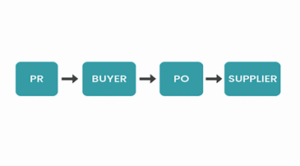
The PR acts like an upstream Procurement Documents filter ensuring every downstream step moves smoothly. When implemented correctly, users spend less time on the process because they’re not circle-backing to fix preventable mistakes.
A Purchase Requisiton Forms Create Traceability, Accountability, and Policy Compliance
In any company with spend visibility goals, compliance requirements, or audit expectations, a Purchase Requisition is not optional—it’s the backbone. It creates a documented record of who requested what, who approved it, and why the expenditure was necessary.
This protects your organization from:
Purchasing best practices include a well-designed Purchase Requisition Form because it includes clear approval signatures or digital signoffs aligned with an Approval Limits in Purchasing table (https://getyourpurchasingdocuments.com/product/approval-limits-template/) That ensures the ‘spend’ or approval authority is followed, and every purchase traces back to a valid need.
A Purchase Requisition form Teaches Users What “Good” Looks Like
Most employees aren’t procurement experts, and they shouldn’t have to be. Your document solves this by embedding field definitions, instructions, and examples directly into the template. This reduces training time and helps new buyers, engineers, and office staff submit clean requisitions from day one.
It’s not just a form—it’s a process guide that makes the whole company better at purchasing.
Why A Purchase Requisition Form Matters
Many companies think they have a “PR process” because they use emails or spreadsheets. That’s not a process—that’s improvisation.
Your ready-made Purchase Requisition provides:
It takes the guesswork out of purchasing and replaces it with discipline, clarity, and accuracy—the foundation of world-class procurement. Download a copy of the Purchasing Requisition today https://getyourpurchasingdocuments.com/product/purchase-requisition-form/.
Learn more about Purchase Requsitions and the Procurement Process by visiting Manufacturing and Supply Chain Services at
Purchasing Requisitions System: The Digital ‘EZ Requisition Program’ – Home

Free
A Purchasing Record—often referred to operationally as a Buy Card—is one of the most overlooked tools in a disciplined procurement environment. When designed correctly, it gives organizations a controlled, auditable method for handling low-dollar purchases without weakening approval discipline, spend authorization, or internal controls.
For start-ups and small businesses, the Purchasing Record often begins as a manual solution. That’s not a flaw; it’s a bridge. Until a full procure-to-pay system or ERP is implemented, this document forms the backbone of purchasing documentation and establishes early financial controls that scale later.
The risk shows up when small purchases are treated as harmless. Employees bypass formal requests [i.e., Purchase Requisitions (PR)], invoices arrive without context, and accounting is left reconstructing who approved what—if anyone did. The Purchasing Record exists to close that gap and restore traceability before bad habits harden into policy violations.
You can see an example of a Purchase Requisition form by clicking on the link below.
https://getyourpurchasingdocuments.com/product/complete-purchase-requisition-form/
What Is a Purchasing Record and How a Buy Card Works
A Purchasing Record is a standardized document used to authorize and document purchases below a defined spend threshold where issuing a full purchase order would be inefficient. Internally, many organizations call this process a Buy Card, but clarity matters: a Buy Card is not a corporate credit card and not a workaround to procurement policy.
Instead, it is a structured spend authorization record that captures the minimum data required to support audit readiness and downstream reconciliation, including:
This creates a defensible procurement audit trail while still allowing speed for operational needs. You can see an example of Approval Limits in Purchasing by visiting the link below.
https://getyourpurchasingdocuments.com/product/approval-limits-template/
Why Purchasing Records Strengthen Procurement Controls
Low-value purchases are where procurement controls quietly erode. Individually, these transactions seem insignificant. Collectively, they create exposure through unauthorized spending, budget leakage, and reconciliation delays.
A Purchasing Record enforces discipline by ensuring every transaction—regardless of size—has documented approval, alignment with approval limits, and clear records of authorized purchases. Without this structure, organizations invite non-PO spending to accumulate outside visibility until an invoice forces the issue.
This is where many companies lose control without realizing it.
Purchasing Record Alignment with Internal Controls and Compliance
From an internal control’s perspective, undocumented purchases are a flashing warning light. A Purchasing Record creates a repeatable, consistent process that aligns procurement activity with financial controls and audit expectations.
Auditors are not chasing perfection; they are looking for consistency and traceability. A documented Buy Card process demonstrates:
This is especially important for organizations subject to SOX requirements, internal audits, or external financial reviews, where informal purchasing is often the first area challenged.
When to Use a Purchasing Record Instead of a Purchase Order
A Purchasing Record is intended for low-dollar, non-recurring, or time-sensitive purchases where issuing a purchase order would add friction without reducing risk. Typical use cases include maintenance items, operational supplies, emergency purchases, or one-time services.
It should never replace purchase requisitions or purchase orders for recurring, contractual, or high-risk spend. Instead, it functions as a controlled exception within the procure-to-pay process.
In some cases, such as ‘emergency purchases,’ company policy may still require after-the-fact purchase order issuance for system completeness. You can find an example of a Purchase Order Form by clicking on the link below.
https://getyourpurchasingdocuments.com/product/purchase-order-form/
How Purchasing Records Prevent Unauthorized and Non-PO Spend
Non-PO spend is not inherently dangerous. Undocumented non-PO spend is.
A Purchasing Record captures transactions that would otherwise surface only when an invoice arrives in accounts payable. By recording these purchases upfront, organizations gain visibility into buying patterns, enforce approval limits, reduce invoice disputes, and improve budget accuracy.
This is how informal spending becomes structured data instead of noise.
Purchasing Record Integration into the Procure-to-Pay Process
When properly implemented, the Purchasing Record is not a loophole—it is a formal step within the procure-to-pay workflow. It complements purchase requisitions for planned spend, purchase orders for sourced material, approval limits tables for governance, and receiving documentation for validation.
This alignment allows procurement to support operations without surrendering control, even when speed is required. You can find an article that discusses the Procure-to-Pay Process (P2P) at length by clicking on the link below.
https://getyourpurchasingdocuments.com/uncategorized/procure-to-pay-process/
Standardizing the Purchasing Record Template for Consistency
Standardization is where the real payoff happens. A uniform Purchasing Record template removes ambiguity, shortens training time, and ensures consistent application of internal purchasing controls across departments and locations.
Organizations that standardize this document experience fewer policy violations, faster approvals, cleaner audits, and better control of spending. The result is a procurement process that balances agility with accountability—and scales without chaos.

$49.95
A Request for Proposal in Procurement
A Request for Proposal in Procurement is one of the most powerful control documents available to a procurement organization. When used correctly, it transforms sourcing from informal quote chasing into a disciplined, auditable decision-making process. When used poorly, it becomes a bloated document that wastes supplier time and produces results no better than a price spreadsheet. The differences are structure, intent, and governance.
At its core, a Request for Proposal is a formal sourcing instrument designed to evaluate suppliers across cost, capability, risk, and commercial alignment. Unlike a simple RFQ, it supports complex buying decisions where scope, service levels, and long-term value matter. In mature organizations, the RFP sits squarely inside the broader procure-to-pay process, acting as the gatekeeper between identifying a need and committing company funds.
A well-designed Request for Proposal process begins with clarity. Before suppliers ever see a document, internal stakeholders must align on requirements, budget constraints, and success criteria. This is where many ‘procurement teams’ stumble. Without internal discipline, even the best RFP document procurement structure will collapse under vague specifications and shifting priorities.
The procurement RFP process typically starts after initial supplier discovery and qualification. This step ensures only capable suppliers are invited to participate, saving time for both sides. Supplier qualification screens for financial stability, technical competence, compliance posture, and capacity. An RFP should never be the first conversation with an unknown supplier. That’s not sourcing, that’s gambling.
Once qualified suppliers are identified, procurement issues a structured RFP procurement template. This template is not just a form; it is a control mechanism. It standardizes how information is requested, how responses are formatted, and how bids will be evaluated. Consistency enables fair competitive bidding and prevents suppliers from gaming the process with selective disclosures.
Understanding how to write an RFP is less about wordsmithing and more about discipline. A strong RFP clearly defines scope, timelines, and expectations. It includes a detailed statement of work (SOW) so suppliers understand deliverables, responsibilities, and performance requirements. It also outlines required commercial terms and conditions, removing ambiguity and preventing late-stage legal disputes that stall awards.
The most effective RFPs support a defensible supplier selection process. This is achieved by defining RFP evaluation criteria before responses are received. Price alone is rarely sufficient. Evaluation factors often include service levels, technical capability, risk exposure, implementation approach, and total cost of ownership. By ‘weighting’ these factors in advance, procurement ensures decisions are data-driven rather than politically convenient.
A strategic sourcing RFP goes a step further. It is not limited to meeting today’s need but considers future scalability, innovation potential, and long-term supplier partnerships. This approach aligns sourcing decisions with broader business objectives and strengthens the overall procurement sourcing process. It also reduces churn by selecting suppliers that can grow with the organization.
Cross-functional participation is another hallmark of a strong RFP. A cross-functional evaluation team typically includes procurement, operations, finance, engineering, and legal. Each function evaluates supplier responses through its own lens, ensuring balanced decision-making. Procurement leads the process, but the outcome reflects enterprise-wide priorities rather than narrow cost targets.
Governance is where the RFP truly earns its keep. A formal RFP creates an audit trail documenting how suppliers were evaluated and why a specific award decision was made. This trail protects the organization during audits, disputes, or leadership changes. It also reinforces approval authority, ensuring that sourcing decisions align with delegated financial controls and corporate policy.
When properly executed, a Request for Proposal in Procurement becomes more than a sourcing document. It is a risk management tool, financial control, and a credibility signal to suppliers. It tells the market that the organization values transparency, fairness, and professionalism.
Organizations that skip or shortcut the RFP often pay for it later through cost overruns, poor service performance, or contractual disputes. In contrast, those that invest in a disciplined RFP framework gain leverage, clarity, and confidence in their supplier decisions. In procurement, structure is not bureaucracy. It is how value is protected and multiplied.
If you need an illustration of a Request for Proposal (RFP) outline, you can download a copy using the link below.
https://getyourpurchasingdocuments.com/product/request-for-proposal-rfp/

$99.95
Request for Quotation (RFQ) Form | Competitive Procurement Tool
In disciplined procurement organizations, a Request for Quotation is not a courtesy email asking suppliers to “send pricing.” It is a control mechanism. When designed correctly, it forces comparability, constrains supplier assumptions, and shifts leverage decisively back to the buyer. When designed poorly, it produces fuzzy quotes, hidden costs, endless clarifications, and negotiations that feel more like archaeology than sourcing.
That difference is not academic. It shows up in margin, cycle time, audit exposure, and supplier behavior.
At this point in the procurement process, buyers should be at that juncture where they are going to send a Request for Quotation (RFQ) to suppliers. These suppliers should already have completed a Non-Disclosure Agreement (NDA) and are either an approved supplier or a supplier that is in the final stages of the approval process. If you need an example of a non-disclosure agreement, you can find an example of a Non-Disclosure Agreement (NDA) by following the link below.
https://getyourpurchasingdocuments.com/product/non-disclosure-agreement/
Likewise, if you are beginning work on approving a new supplier, you can find an example of a Supplier Self-Self-Assessment Survey or a Supplier Operations Audit by clicking on the links below.
https://getyourpurchasingdocuments.com/product/supplier-self-assessment-survey/
https://getyourpurchasingdocuments.com/product/supplier-operations-audit/
At its core, a Request for Quotation is a structured, written demand for pricing and commercial terms under defined conditions. It converts vague purchasing intent into a standardized pricing request that suppliers must respond to on the buyer’s terms, not their own. This is why mature procurement teams treat the RFQ as a governance document, not just a step in the sourcing workflow.
The Request for Quotation (RFQ) Form Forces Comparability Not Guesswork
The primary job of a Request for Quotation is to enable ‘apples-to-apples’ quote comparison. Without tight structure, suppliers’ price different assumptions: different volumes, different delivery terms, different lead times, and different cost inclusions. The result looks competitive on the surface but collapses under scrutiny.
A properly executed RFQ procurement process eliminates that ambiguity by defining commercial and technical specifications in advance. Quantities, tolerances, packaging, quality standards, and delivery expectations are stated explicitly. Suppliers are not invited to “interpret.” They are instructed to comply.
This is where issuing an RFQ to suppliers becomes an act of control rather than administration. By requiring supplier cost breakdown requirements—material, labor, overhead, tooling, logistics, and margin, the buyer exposes cost drivers that would otherwise remain buried inside a lump-sum price. Tooling and non-recurring costs are separated. Logistics and freight assumptions are surfaced instead of hidden. Minimum order quantities (MOQ) are declared rather than discovered later.
That structure makes supplier pricing comparison real, not rhetorical.
The Request for Quotation (RFQ) Form Shifts Leverage Back to the Buyer
Suppliers naturally prefer ambiguity. Ambiguity gives them room to adjust later. A disciplined request for quotation document removes that room.
By defining lead time and delivery commitments, the buyer prevents post-award renegotiation disguised as “capacity constraints.” By requiring a quote validity period, the buyer prevents suppliers from shortening pricing windows to force rushed decisions. By demanding explicit supplier assumptions and exclusions, the buyer converts future disputes into present-day clarifications.
This is why the sourcing RFQ process compresses negotiation cycles when executed correctly. Most negotiation pain comes from discovering misalignment late. A well-designed RFQ front-loads that ‘discovery,’ and reduces clarification rounds with suppliers after pricing is received.
Instead of debating what the supplier “meant,” procurement evaluates what the supplier committed to in writing.
The Request for Quotation (RFQ) Form – from Quotes to Defensible Decisions
An ‘RFQ’ is only as strong as its evaluation discipline. Structured responses enable the use of an RFQ response evaluation matrix that scores suppliers across price, lead time, commercial terms, risk, and compliance. This transforms sourcing from opinion-based selection into documented decision-making.
That documentation matters. Documented supplier quotes tied to a defined procurement RFQ form create an audit trail that survives executive review, internal audits, and external scrutiny. When sourcing decisions are challenged, the buyer can point to a controlled competitive bidding process rather than individual judgment.
This is where procurement infrastructure shows its value. A casual supplier quotation request produces emails. A controlled RFQ produces records.
Request for Quotation (RFQ) Form – Eliminating Fuzzy Quotes and Hidden Costs
Most hidden costs are not hidden at all—they are simply not asked about. A structured RFQ template procurement forces suppliers to disclose elements they would prefer to gloss over: expediting fees, packaging premiums, payment terms dependencies, or pricing tied to unrealistic volumes.
When suppliers are required to respond within a standardized format, ambiguity collapses. When pricing is submitted against the same commercial baseline, negotiation becomes surgical rather than adversarial.
The result is not just better pricing. It is better predictability.
Request for Quotation (RFQ) Form – Part of the Procurement System
A Request for Quotation does not live in isolation. Instead, it sits between supplier qualification and purchase order issuance, feeding downstream controls. RFQ outputs inform supplier selection, pricing approvals, and ultimately the terms embedded in the purchase order.
On GetYourPurchasingDocuments.com, RFQ tools are designed to integrate cleanly with upstream supplier evaluation documents and downstream Purchase Order Terms and Conditions. On mscsgrp.com, the RFQ framework is positioned as part of a broader procure-to-pay control model, reinforcing that sourcing discipline does not stop at price selection.
This linkage is what separates downloadable paperwork from procurement infrastructure.
The Strategic Payoff
A properly designed RFQ eliminates fuzzy quotes, exposes hidden costs, compresses negotiation cycles, and creates documentation that holds up under pressure. It changes supplier behavior by removing ambiguity. It changes buyer behavior by enforcing structure. And it changes outcomes by replacing negotiation theater with disciplined comparison.
In procurement, leverage is rarely about volume alone. It is about who controls the rules of engagement. A strong Request for Quotation does exactly that—and does it in writing.
If you would like to have a copy of a Request for Quotation (RFQ) Form that includes a quote form summary tab, you can find it by clicking the link below.
https://getyourpurchasingdocuments.com/product/request-for-quotation-rfq/
If you would like to learn more about the Request for Quotation (RFQ) Form, just follow one of the links below.
https://quollnet.com/article/request-for-quotation-rfq-form-template
Monday – Friday: 9:00 AM – 5:00 PM CST
Other Dates and Times: By Appointment Only
469.500.3040
4705 Melrose Park Ct
Colleyville, Texas 76034
New Documents Coming Soon:
Site by DFW Website Designers
Sign up to stay informed on the latest news and exclusive offers from Get Your Docs.