
Request for Proposal (RFP) Template
$49.95
A Request for Proposal in Procurement
A Request for Proposal in Procurement is one of the most powerful control documents available to a procurement organization. When used correctly, it transforms sourcing from informal quote chasing into a disciplined, auditable decision-making process. When used poorly, it becomes a bloated document that wastes supplier time and produces results no better than a price spreadsheet. The differences are structure, intent, and governance.
At its core, a Request for Proposal is a formal sourcing instrument designed to evaluate suppliers across cost, capability, risk, and commercial alignment. Unlike a simple RFQ, it supports complex buying decisions where scope, service levels, and long-term value matter. In mature organizations, the RFP sits squarely inside the broader procure-to-pay process, acting as the gatekeeper between identifying a need and committing company funds.
A well-designed Request for Proposal process begins with clarity. Before suppliers ever see a document, internal stakeholders must align on requirements, budget constraints, and success criteria. This is where many ‘procurement teams’ stumble. Without internal discipline, even the best RFP document procurement structure will collapse under vague specifications and shifting priorities.
The procurement RFP process typically starts after initial supplier discovery and qualification. This step ensures only capable suppliers are invited to participate, saving time for both sides. Supplier qualification screens for financial stability, technical competence, compliance posture, and capacity. An RFP should never be the first conversation with an unknown supplier. That’s not sourcing, that’s gambling.
Once qualified suppliers are identified, procurement issues a structured RFP procurement template. This template is not just a form; it is a control mechanism. It standardizes how information is requested, how responses are formatted, and how bids will be evaluated. Consistency enables fair competitive bidding and prevents suppliers from gaming the process with selective disclosures.
Understanding how to write an RFP is less about wordsmithing and more about discipline. A strong RFP clearly defines scope, timelines, and expectations. It includes a detailed statement of work (SOW) so suppliers understand deliverables, responsibilities, and performance requirements. It also outlines required commercial terms and conditions, removing ambiguity and preventing late-stage legal disputes that stall awards.
The most effective RFPs support a defensible supplier selection process. This is achieved by defining RFP evaluation criteria before responses are received. Price alone is rarely sufficient. Evaluation factors often include service levels, technical capability, risk exposure, implementation approach, and total cost of ownership. By ‘weighting’ these factors in advance, procurement ensures decisions are data-driven rather than politically convenient.
A strategic sourcing RFP goes a step further. It is not limited to meeting today’s need but considers future scalability, innovation potential, and long-term supplier partnerships. This approach aligns sourcing decisions with broader business objectives and strengthens the overall procurement sourcing process. It also reduces churn by selecting suppliers that can grow with the organization.
Cross-functional participation is another hallmark of a strong RFP. A cross-functional evaluation team typically includes procurement, operations, finance, engineering, and legal. Each function evaluates supplier responses through its own lens, ensuring balanced decision-making. Procurement leads the process, but the outcome reflects enterprise-wide priorities rather than narrow cost targets.
Governance is where the RFP truly earns its keep. A formal RFP creates an audit trail documenting how suppliers were evaluated and why a specific award decision was made. This trail protects the organization during audits, disputes, or leadership changes. It also reinforces approval authority, ensuring that sourcing decisions align with delegated financial controls and corporate policy.
When properly executed, a Request for Proposal in Procurement becomes more than a sourcing document. It is a risk management tool, financial control, and a credibility signal to suppliers. It tells the market that the organization values transparency, fairness, and professionalism.
Organizations that skip or shortcut the RFP often pay for it later through cost overruns, poor service performance, or contractual disputes. In contrast, those that invest in a disciplined RFP framework gain leverage, clarity, and confidence in their supplier decisions. In procurement, structure is not bureaucracy. It is how value is protected and multiplied.
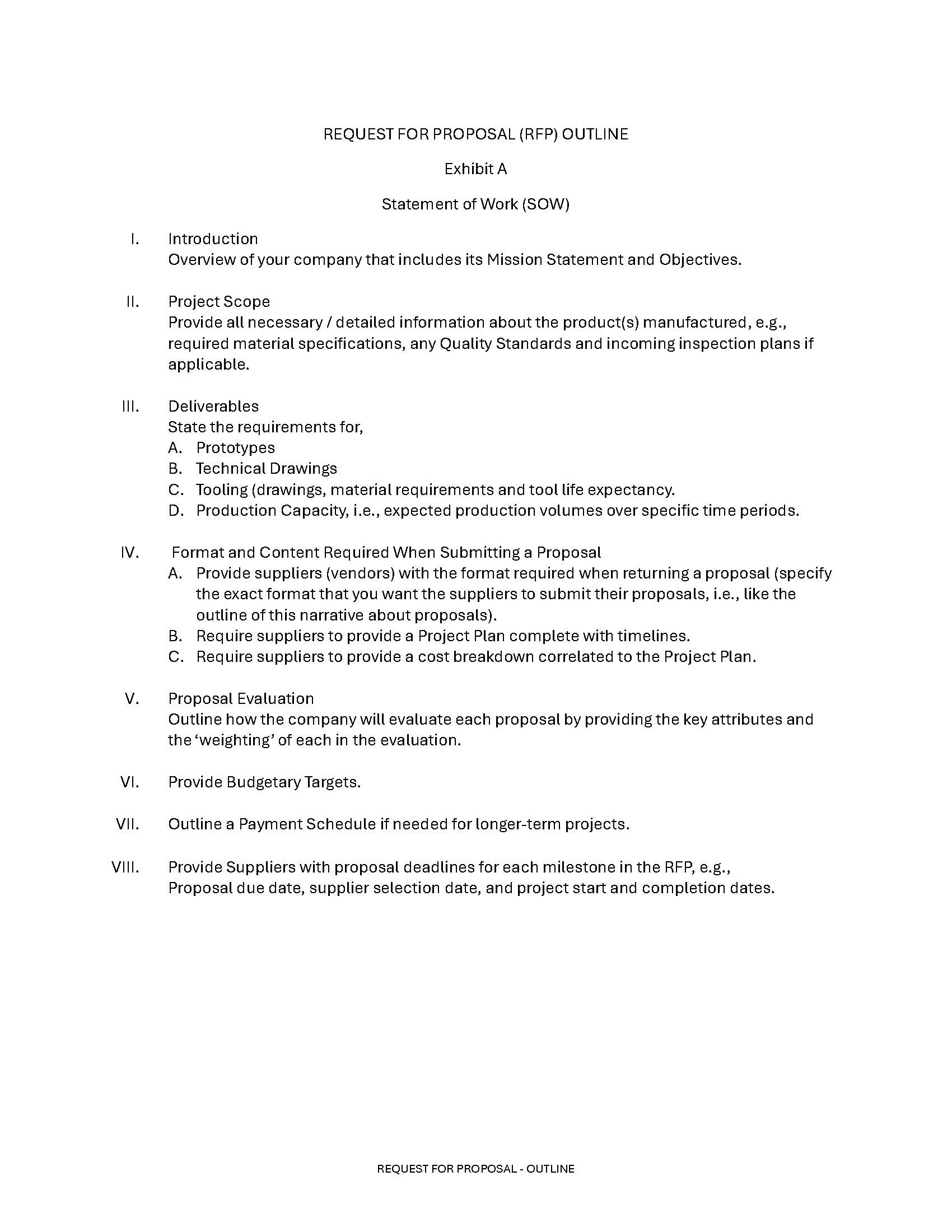
If you need an illustration of a Request for Proposal (RFP) outline, you can download a copy using the link below.
https://getyourpurchasingdocuments.com/product/request-for-proposal-rfp/
Products Include:
The price includes links to everything you need to use the form(s). The forms, explanation, examples, and the link download(s) are located in your account under Digital Forms.
Request for Proposal (RFP) Template
Purchase now and get immediate access the file
$49.95


